That Brick Wall

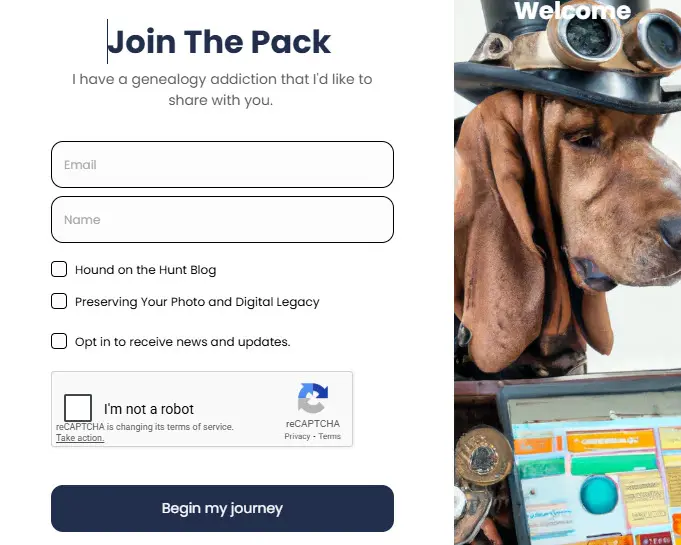
At the end of December 2025, I posted my intended list of blog topics for my blog and Substack account. If you want to see the list, I’ll be posting the graphic at the bottom of this post. August’s topic is “That Brickwall.” I’ll be honest, I’ve missed a few times, but I can always come back to them 🙂
Often in genealogy, you hear the term “brick wall,” but what does that really mean?
A definition might be: A genealogy brick wall is a point in your research where the evidence runs out, conflicts, or fails to provide enough information to confidently continue.
I used to think a “brick wall” had to be something monumental, but that’s not the case.
A genealogy brick wall can be a major ancestral mystery or a much smaller unanswered question. What makes it a brick wall is not its size—it is the fact that you cannot move forward with the evidence you currently have.
Sometimes we have been working on the same brick wall for years. And sometimes—we have been carrying the same unanswered question around for decades.
My Beaton Batten Mystery comes to mind when I think about brick walls.
A brick wall does not always mean there are no records.
Maybe it means we have been asking the same question in the same way for too long.
When Did You Last Look at Your Brick Wall?
That is the first question. When did you actually sit down and look at everything again?
It may be only months, but for some brick walls it might be five, ten, or twenty years since you seriously researched that ancestor; the genealogy world has changed enormously.
Records have been digitized.
New collections have come online.
Newspapers have become searchable.
Archives have indexed materials that once required an in-person visit.
Collaborating doesn’t mean asking that maiden aunt who keeps the genealogy; it can now mean posting on a social media site and getting ideas from around the globe.
DNA testing has created an entirely new category of evidence. Tools such as shared matches, chromosome analysis, clustering, and relationship probability tools let us investigate family connections that simply didn’t exist when many of us began researching.
Now artificial intelligence and full-text searching help us find names buried in documents we might never have discovered using a traditional index.
Your brick wall may not have changed.
But the tools available to investigate them certainly have.
Start Again — From the Beginning
One of the hardest things for an experienced genealogist is pretending we know nothing. We have looked at the family so many times that certain facts begin to feel permanent.
We “know” where someone was born.
We “know” who their parents were.
We “know” which family they belonged to.
But do we really?
Maybe it’s time to go back to the first record and rebuild the case.
What does each record actually say? I often find that when I transcribe a document, I read each word, and sometimes I discover something my eyes have skimmed over before. Then there’s that age thing… I’m talking about me…each year ticks on. Over time, there might be an important detail that you’ve forgotten.
We need to think about who provided the information. Was that person giving the information in a position to know?
Are dates consistent?
Are birthplaces consistent?
Do occupations, neighbors, witnesses, or addresses change?
Most importantly:
What have you assumed?
Sometimes the crack in a brick wall begins when you realize something you believed for thirty years was never actually proven.
Stop Researching the Person
This sounds completely backward, but sometimes the best way to find an ancestor is to stop looking for them.
Research the people around them. Their siblings. Their spouse. Their children. Their witnesses. Their neighbours. Their business partners. Their in-laws. Their church congregation.
Their FAN club — Friends, Associates and Neighbors.
Our ancestors did not live in isolation. They traveled with people. I often refer to my Kottman branch and the fact that they traveled together like “the migration of the wildebeest”.
But our ancestors married people they met through family and community connections. They witnessed each other’s marriages. They bought land beside relatives. They named children after parents, siblings and grandparents.
The record that identifies your ancestor may not belong to your ancestor at all.
It may belong to their sister.
Look at the Geography
Maps are one of my favorite genealogy tools.
Put your ancestor on a map.
Where were they living?
Where was the nearest church? They might have gone to a church just up the road because their church was several miles away just beyond that hill.
Where was the nearest courthouse?
Where did the road lead?
Was there a river, railway, or migration route nearby?
Sometimes we search within modern boundaries even though our ancestors lived before those boundaries existed.
A family living near a county, provincial or state border may have conducted business, attended church or registered events somewhere entirely different from where we have been searching.
Read the Records You Already Have Again
This is one of my favorite genealogy exercises. I try to do it each year, especially with records you’ve collected but didn’t know meant something.
Take a census record, marriage record, obituary, or death certificate you have looked at dozens of times and read every word again.
Not just the name. Look at the witnesses. The informant. The address. The occupation. The birthplace. The neighbours. The officiant. The cemetery. The undertaker.
The smallest detail may become important once you know more about the family.
A record does not change.
But what we understand about the record does over time.
And Then There Is DNA
DNA has changed brick-wall research completely.
It may not hand us the answer, but only through DNA was I able to understand who my great-grandfather’s parents were, and then find the documents.
Shared matches can identify clusters.
Unexpected relationships can challenge long-held assumptions.
Matches descending from a suspected ancestor’s siblings can provide evidence when no direct record survives or ever existed.
And sometimes DNA tells us something we were not expecting at all.
That can be uncomfortable.
But genealogy is not about proving the story we want to be true.
It is about following the evidence.
Write Down What You Know — and What You Don’t
Create two lists.
What I know and What I think I know.
They are not the same thing.
Then create a third:
What I need to know.
Instead of:
Who were Mary’s parents?
You might have:
- Where was Mary living before her marriage?
- Who witnessed her marriage?
- Were there other people with her surname in the same community?
- What church did she attend?
- Where were her children baptized?
- Do DNA matches connect to families living near her?
- Does her obituary mention siblings?
- Did any of her children’s records identify her birthplace differently?
Those are questions we can research.
“Who were Mary’s parents?” is a brick wall.
The smaller questions can be doors.
Pick One Brick Wall This Fall
September always feels a little like a new beginning to me. I think it’s because school goes back and it’s thoughts of new notebooks and pencils.
Summer winds down. Routines return. And it feels like a good time to pull out a research problem we haven’t looked at in a while.
So here is my challenge.
Choose one brick wall.
Open the file. Read your old research. Check your sources.
Write down what you actually know and how you know it.
Identify the assumptions.
Look at the people around your ancestor.
Search the newest databases.
Revisit the DNA.
And ask yourself one important question:
If I were beginning this research today, would I investigate it the same way?
The answer might be no.
And that could be exactly what finally gets you through that wall.
Your Turn
What is that brick wall in your family tree?
The one ancestor you would most like to identify, find, or finally understand?
Tell me in the comments. Sometimes even putting the problem into words helps us see the next place to look.
And who knows?
Maybe this is the year that wall finally comes down.
Join the Pack
Sign up for my newsletter below and be the first to hear about new blog posts, YouTube videos, and exclusive offers from my trusted genealogy partners.