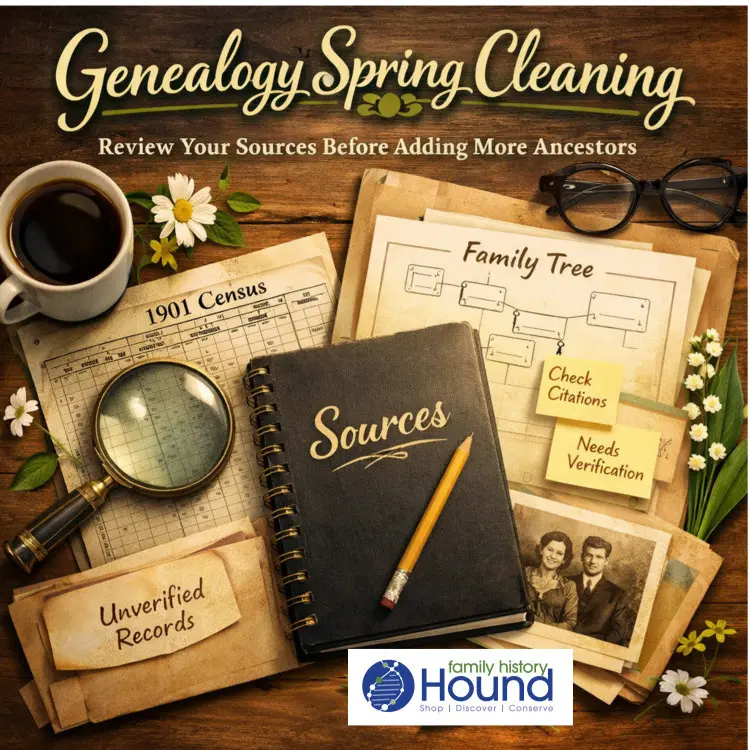
🌱 Genealogy Spring Cleaning: Reviewing Your Sources
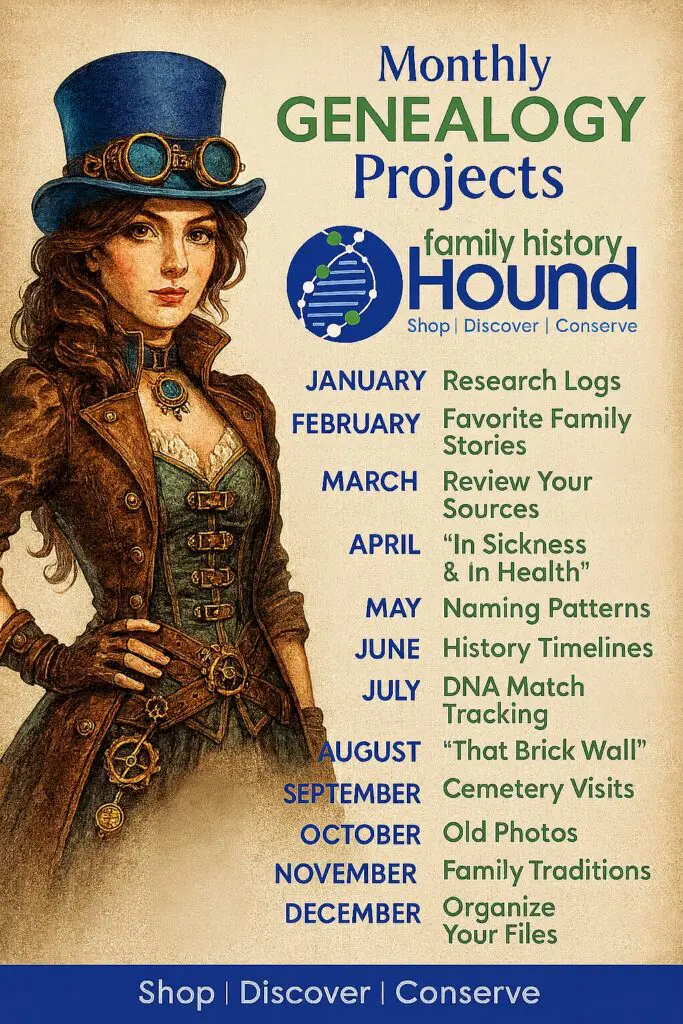
At the end of December 2026, I posted my intended list of blog topics for this blog and Substack account. If you want to see the list, I’ll be posting the graphic at the bottom of this post. March’s topic is about Reviewing Your Sources
Spring cleaning for me, when I’m thinking about my genealogy, isn’t about starting over—it’s about clearing the fog so my research becomes clearer, stronger, and easier to build on.
Think of it as:
👉 Dusting off your evidence
👉 Tightening up your conclusions
👉 Letting go of what no longer holds up
🧹 1. Dust Off Your Existing Sources
Start with what you already have—no new research yet.
What this looks like:
- Open one ancestor (or one family line)
- Review every source attached
- Ask:
- Do I still understand why I added this?
- Does it support the fact it’s attached to?
Spring Cleaning Mindset:
You’re not adding—you’re clarifying.
🧾 2. Tighten Your Source Citations
This is where I think some genealogists avoid looking too closely… but spring is the perfect time.
What to clean up:
- Missing citations
- Vague citations (“Ancestry Tree” 😬 to me, other people’s trees aren’t citations, they are just hints)
- Broken links or lost images
- Screenshots without context
🔍 3. Reevaluate “Accepted Truths”
We all have them—the facts we added early on and never questioned again.
What to look for:
- Birth dates from census records (we know those can shift!)
- Unsourced parents
- Assumptions based on proximity or naming
I’m not saying this applies only to other people, as I’m guilty about many of these things, too. Some of my research is older, from when I was a baby genealogist, and if you don’t revisit old material with a new viewpoint, some of your old genealogy will remain ineffective.
Good source citations are what keep your genealogy strong and reliable. They make it possible for you—and anyone who works with your research later—to go back and see exactly where each piece of information came from and decide how much confidence to place in it. Without that trail, it’s very easy for small errors to slip in and grow over time into incorrect dates, wrong parents, or even entire branches that don’t belong in your tree at all. When you take the time to record where a record was found—whether online, or at an archive—you’re making sure your research can always be checked, understood, and built on in the future.
Spring Cleaning Action:
- Flag anything questionable
- Add a note: “Needs verification.”
🧺 4. Remove or Separate the “Maybe Pile”
- Just like cleaning a closet, genealogy has a “maybe this belongs” pile.
- What does this include:
- Records that might be your person
- DNA matches you haven’t confirmed
- Individuals attached “just in case.”
What to do:
- Move to a “Research Parking Lot”
- Or clearly label as:
- “Unproven”
- “Possible match”
👉 Some of the genealogy programs have tags that you can use to bring you back to these items that need a closer look. This is HUGE for reducing confusion later.
🧬 5. Check Source–Conclusion Alignment
This is where you level up from collector → genealogist.
Ask:
- Does this source actually support this conclusion?
- Or am I stretching it?
Example:
- A census supports residence, not the exact birth date
- A death record supports death, but the informant may affect the accuracy
🧠 6. Add Context While It’s Fresh
As you review, your brain is reconnecting dots—capture that!
Add:
- Notes on why you believe something
- Conflicts between sources
- Research questions
👉 This turns your tree into a working research tool, not just storage.
🌼 7. End With One Clean, Strong Profile
Pick ONE person and fully clean them up.
When you’re done:
- All sources reviewed
- Citations improved
- Questions identified
- Notes added
This becomes your “Gold Standard” person…and a model for future work.
That’s my spring-cleaning project. I’m going to start with my great-grandparents and work forward because I know there is less material to go through with that older generation, so I can improve on them and get this right, then move forward in time. When I’m done, I hope to have a solid framework for my family history book, which I’d like to write this year.
Are you going to do some “Spring Cleaning”? If you drop a note in the comments and let me know where you’re starting.
Want to stay in the loop?
Sign up for my newsletter below and be the first to hear about new blog posts, YouTube videos, and exclusive offers from my trusted genealogy partners.