
Understanding Caroline Through Her Children
#my30 Ancestors Project
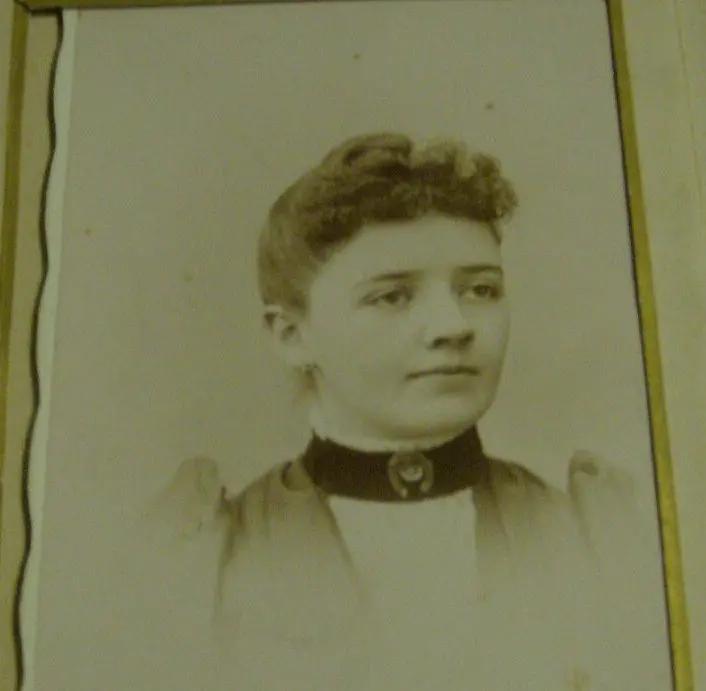
Christine Shannon, the 11th child of John and Caroline Shannon
One of the challenges of writing about women in the nineteenth century is that the records often tell us very little about their daily lives.
When I first began researching my 2x great-grandmother, Caroline Amelia Jones Shannon, her timeline appeared straightforward, and you might even say a bit boring. She married, raised eleven children, and lived her entire life in Leeds County, Ontario. But as I began researching each of her children individually, a different picture of Caroline’s life emerged.
Genealogists often focus on the events that happened directly to our ancestors. Yet some of the most significant moments in a person’s life may be reflected in the lives of the people around them.
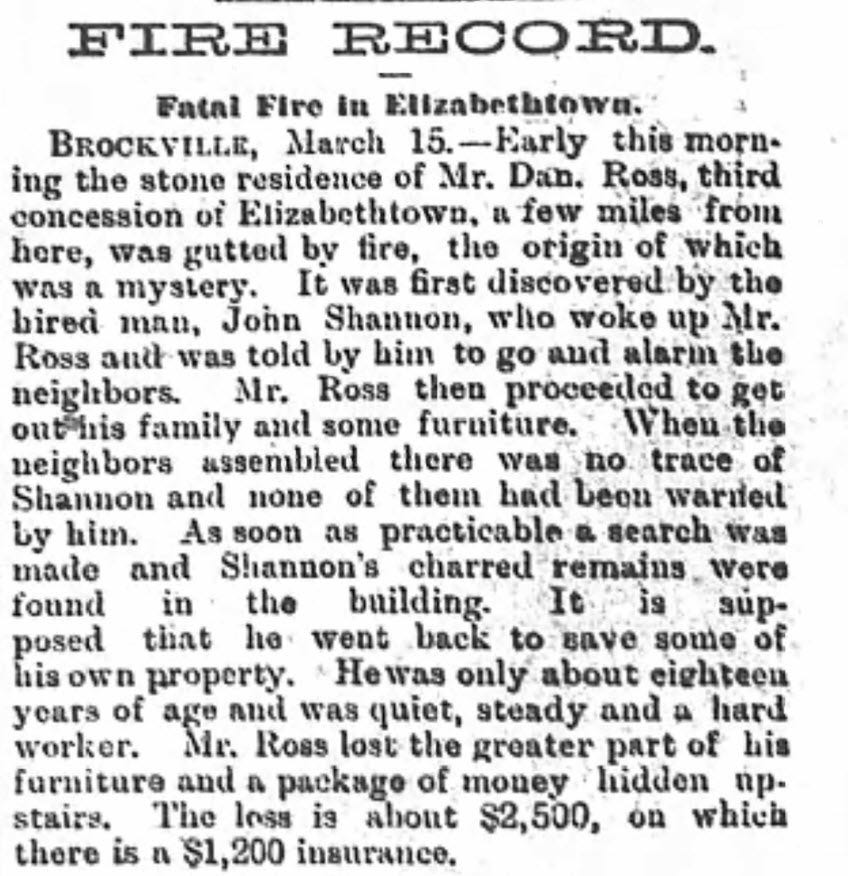
Caroline gave birth to eleven children. Among them was John Henry Shannon, who died in 1888 at only seventeen years of age in a fire at a neighbor’s farm where he was working. The article below discusses the value of the things Mr. Ross lost, but what’s really sad is that John Henry died while trying to retrieve the few possessions he likely had.
Four years later, Caroline’s son Jesse Nelson Shannon was committed to an asylum at the age of nineteen. His file states that he had had issues since the age of two, and the two files I received from Library and Archives Canada are disturbing to read.
The institutional language is harsh by modern standards. Physicians classified him as an “idiot,” a term used medically at the time for individuals with intellectual disabilities. The records note that he:
- Could speak, hear, and see normally.
- Could walk independently.
- Could read and write “a little.”
- Was described as mischievous.
- Had limited educational attainment.
- Wandering from home.
- Chasing and frightening children.
- Being easily distracted.
- Talking constantly and jumping rapidly from one subject to another.
The records show Jesse remained under institutional care for decades, eventually being transferred from Orillia Hospital to Brockville. By 1929, he was 54 years old and had spent most of his adult life in institutions.
In June 1930, Jesse’s health deteriorated dramatically.
He developed:
- Severe jaundice.
- Abdominal swelling.
- Heart irregularities.
- Significant pain.
- Progressive weakness.
Doctors initially treated his heart condition with digitalis. As his condition worsened, consulting physicians suspected cancer of the pancreas. Surgery was considered inadvisable because of his overall condition. Instead, staff focused on keeping him comfortable.
The records become increasingly poignant in August 1930. Staff noted that they attempted to locate relatives, including a brother in North Bay, but their letter was returned. They further observed that there had been no correspondence or inquiries from friends for many years.
Jesse died on 15 August 1930 at approximately 3 p.m., aged 55, spending most of his life in an institution.
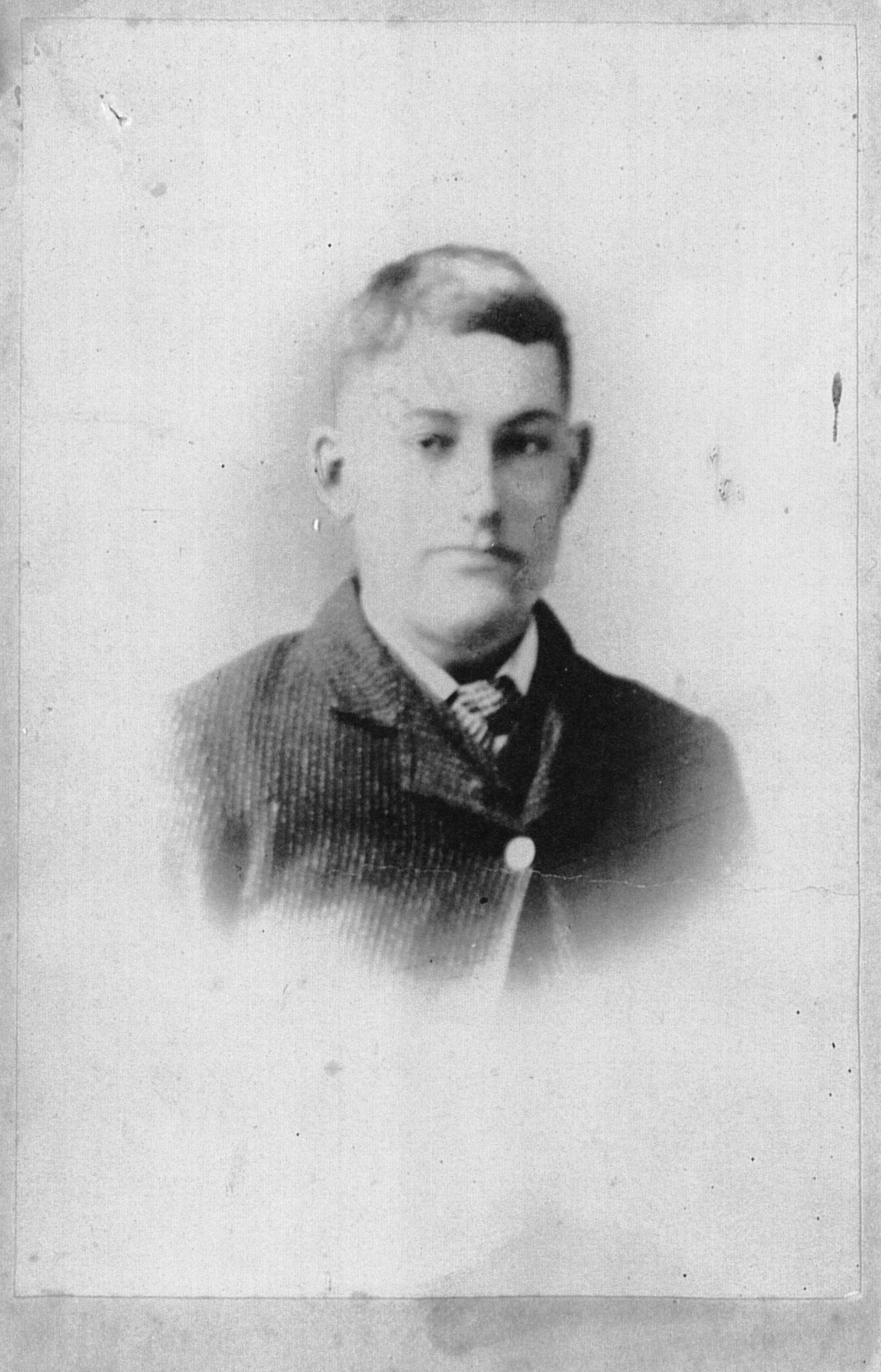
Photo in Jesse’s possession at the institute. Likely a brother
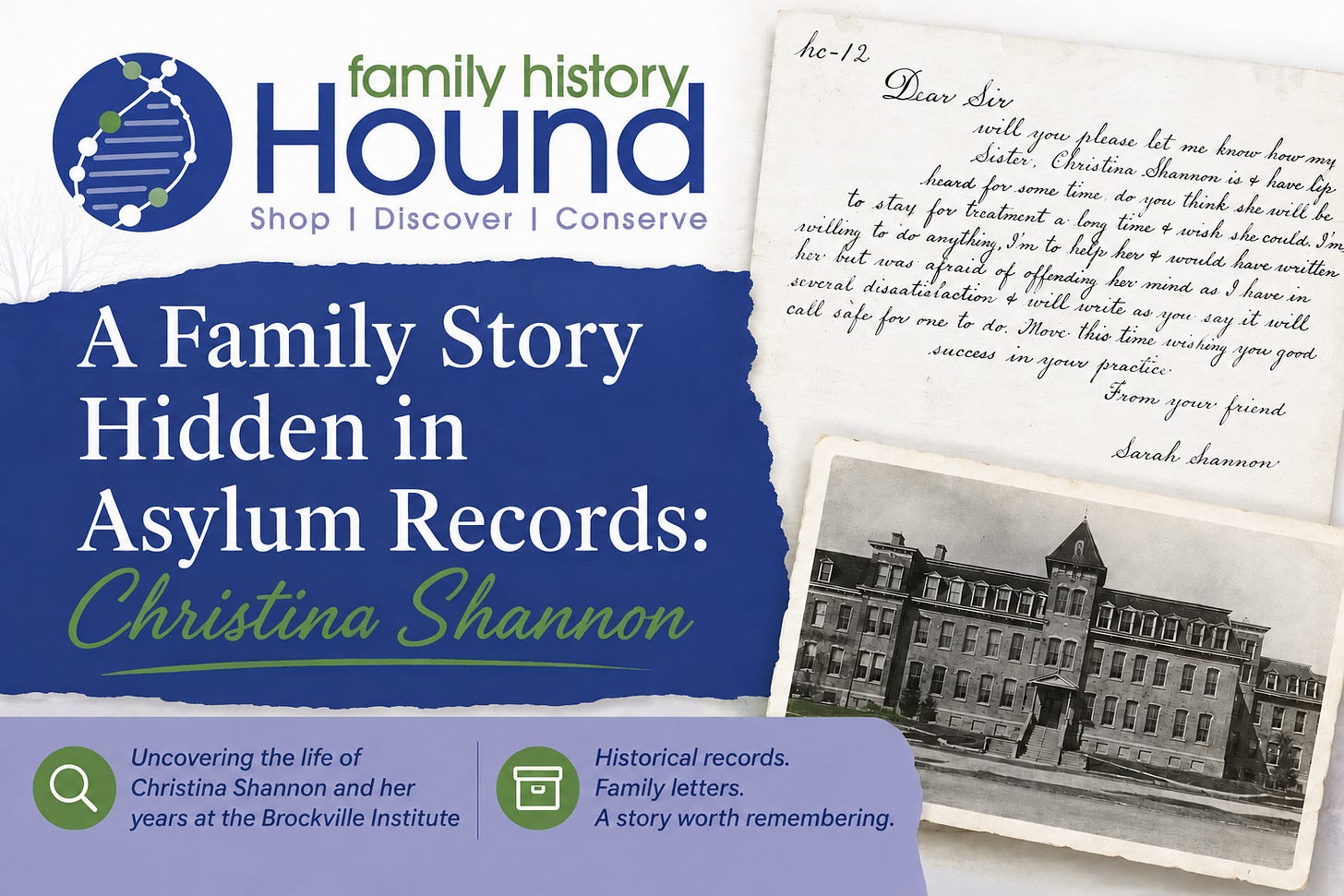
Caroline’s loss of Jesse to an institute wasn’t the end of her sorrow, because in 1892 her youngest daughter, Christine Shannon, was admitted to the Brockville Asylum at only 13. (I’ve created a video and launched it on YouTube, telling the story of Christine. I hope you watch it HERE.)
Those facts appear as separate entries in different records.
But for Caroline, they were not separate events.
They were the experiences of a mother watching her children suffer and feeling helpless.
The records never tell us what Caroline thought as she buried one child or watched others struggle with mental illness. They don’t record her fears, her prayers, or the conversations that took place around the kitchen table. Yet those events undoubtedly shaped her life.
For all that Caroline endured as a wife and mother, there is one sorrow she was spared. Caroline Amelia (Jones) Shannon died of pneumonia on 6 March 1901, thirty years before her son Jesse and long before her daughter Christina passed away. She never witnessed the long years Jesse spent in institutional care, nor did she see Christina’s tragic decline and confinement. Yet her life had already been marked by hardship.
This is one of the reasons I believe it is important to research entire families rather than focusing on a single ancestor. Sometimes the true story of an individual is hidden in the records of their children, siblings, and neighbors.
In many ways, I have come to understand Caroline not through her own records, but through the lives of the eleven children she brought into the world and did her best to raise.
The #My30 Ancestors Project is my effort to document the lives of thirty direct ancestors, from my parents back to my 2× great-grandparents. By combining traditional genealogy research, DNA evidence, photographs, and modern technology, I’m creating a collection of stories that will preserve my family’s history for future generations. Each ancestor represents a piece of the larger family story, and with every biography I write, I gain a deeper understanding of where I come from and the legacy I hope to leave behind.